
Loading...
Serving Sonoma, CA and surrounding areas. (707) 231-4240
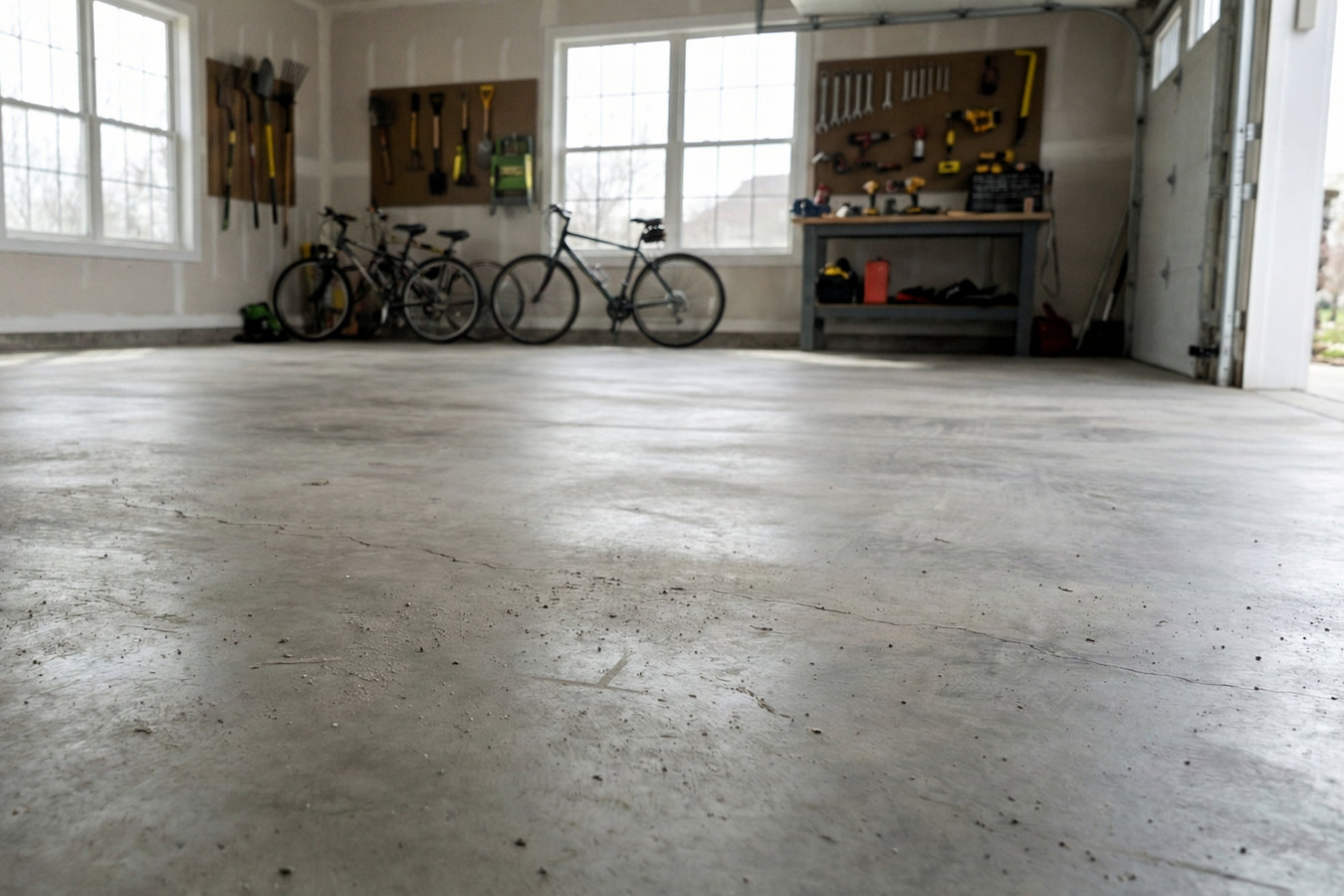
Cracked, crumbling, or uneven garage floor? We replace Sonoma garage floors from the ground up — proper subbase, permitted pour, and a finish ready for whatever you have planned.
Garage floor concrete in Sonoma means removing the old slab, compacting the soil and gravel base beneath it, and pouring a fresh four-inch slab — most residential jobs take one to two days of active work, followed by about a week before you can drive on it.
Most homeowners contact us after noticing cracks that reappear every winter, a surface that is flaking off in patches, or a floor that simply looks too rough to use for anything beyond parking. Sonoma's older housing stock means many garage slabs were poured decades ago with thinner concrete and minimal base preparation — conditions that make a replacement overdue rather than optional. If you are also updating yourhome's interior floors, our concrete floor installation service covers those spaces as well.
We handle permits through the appropriate building authority — the City of Sonoma for in-city properties or Sonoma County for unincorporated addresses — and coordinate the inspection sign-off before the job is complete. That paper trail matters when you sell or refinance.
Small hairline cracks are common and mostly cosmetic. But if your cracks are wide enough to slip a pencil into, or you have patched the same spots more than once, the slab is failing. In Sonoma, this pattern is especially common in homes built before 1980 where thin slabs sit on clay-heavy soil that shifts with each rainy season.
Walk slowly across your garage and notice whether it feels level. If one section has sunk, or water pools in a corner after rain, the ground underneath has likely shifted or settled. This is a structural issue, not a cosmetic one — patching the surface will not fix what is happening below.
A fine gray powder on your floor, or a surface that is peeling off in thin layers, means the top of the concrete is deteriorating. This happens when a slab was poured in poor conditions, finished too quickly, or simply reached the end of its useful life. A deteriorating surface gets worse over time and can become a slip hazard.
Sonoma's wet winters can push groundwater up through a garage floor that lacks proper drainage protection underneath. Damp patches or white chalky residue after a rainy stretch mean moisture is working through the slab. Left unaddressed, this can damage stored items and eventually weaken the concrete itself.
Every garage floor project starts with an honest site assessment. We check the condition of the existing slab, evaluate soil stability, and confirm drainage before quoting anything. From there, we handle demolition, debris removal, grading, subbase compaction, forming, pour, and finishing as a single coordinated project — nothing gets handed off to a subcontractor in the middle of the job.
For homeowners who want more than plain gray concrete, we finish garage floors with broom texture for grip, trowel finishes for a smoother surface, or prepare the slab with the profile needed for an epoxy coating or sealer after curing is complete. We also add control joints at proper intervals so any future cracking follows predictable lines rather than random fractures across the slab.
If you are updating multiple areas of your property at the same time, our concrete floor installation service covers interior living spaces, and our concrete driveway building service handles the approach to your garage with matching quality and proper drainage across the whole run.
Slip-resistant texture appropriate for vehicles, foot traffic, and storage — the right choice for most residential garages.
A flatter surface that works well if you plan to add an epoxy coating or want a cleaner look for a workshop space.
Steel rebar added inside the slab — recommended for garages that park heavy trucks, store significant equipment, or sit on notably unstable soil.
Pour finished and profiled specifically to accept an epoxy or polyurea coating after the 28-day curing period.
Planned cuts placed at intervals that guide cracking into straight, predictable lines — standard on every pour we complete.
Five or six inches instead of the standard four — built for heavy-use garages or properties with soil movement history.
A large share of Sonoma's residential neighborhoods were built in the 1950s through 1970s, when garage floor standards were less demanding than they are today. Many original slabs from that era were poured thinner than current recommendations and over inadequate base layers. If your home is more than 40 years old, there's a reasonable chance your garage floor is overdue for a full replacement rather than another round of patching.
Sonoma's clay-heavy soils compound the problem. Clay expands when wet and contracts when dry, and that seasonal movement works against any slab sitting above it. This cycle is what causes garage floors here to crack in the same spots year after year. A properly built replacement accounts for this by compacting a gravel drainage base before the pour and by sizing the slab thickness to the expected load. We serve homeowners throughout Sonoma, Rohnert Park, and Petaluma and encounter these conditions on every project in the valley.
Sonoma's rainy season — concentrated between November and April — also creates a narrow ideal window for pouring. Fresh concrete and rain do not mix well; water on a freshly poured surface weakens it before it can harden. Most experienced local contractors schedule garage floor work between May and October. If your project needs to happen in the shoulder season, we have a plan to protect the pour — but booking early in the season is always the better approach.
We respond within one business day. Tell us your garage size, whether an old floor needs removal, and what you plan to use the space for — that information shapes the quote and saves time during the site visit.
We visit your property to look at the existing floor, check subbase conditions, and measure the space. You get a written estimate within a day or two that covers everything — demolition, prep, pour, and cleanup — so there are no surprises after work begins.
We apply for the required building permit through the City of Sonoma or Sonoma County, depending on your address. Permit processing typically takes a few days to a couple of weeks. We coordinate the inspection — you do not fill out any forms or visit any office.
Demolition and subbase prep happen on day one. The pour follows on day two. You can walk on the floor within 24 to 48 hours and drive on it after roughly a week. The building inspector signs off on the finished slab before we close the job.
Free written estimate. We pull the permit and coordinate the inspection — you just approve the price.
(707) 231-4240We have poured slabs throughout the Sonoma Valley and know exactly how local clay soils behave with the seasons. Every garage floor we build includes a compacted gravel drainage base sized to the conditions at your specific site, not a generic spec copied from a drier climate.
Garage floor replacements in Sonoma require a building permit, and we pull it as a standard part of every project. We coordinate the inspector visit and get the sign-off before we close the job, so your work is on the record when you sell or refinance.
We work throughout Sonoma County and the broader North Bay — from Sonoma and Petaluma to Napa, Santa Rosa, and beyond. That range means we know local permit offices, soil conditions, and scheduling realities rather than treating every job like a generic residential pour.
Every garage floor we build follows concrete construction standards published by the American Concrete Institute — covering slab thickness, control joint spacing, and subbase requirements. Those standards exist for a reason, and we do not skip steps to save a day.
Every one of those points comes back to one idea: a garage floor is a foundation for everything else in the space. Whether you are planning a workshop, adding storage, or just want a floor that looks right when you open the door, we build it to handle the conditions specific to Sonoma. Our work follows the concrete construction guidelines published by the American Concrete Institute — the most widely recognized standard for slab quality in the industry.
Interior concrete floors for living spaces, workshops, and commercial areas — finished to your specs.
Learn moreReplace or build a driveway that connects to your garage with matching slab quality and proper drainage.
Learn moreContractor slots fill up fast before the dry season — reach out now to lock in your start date before the summer schedule closes.