Loading...
Serving Sonoma, CA and surrounding areas. (707) 231-4240
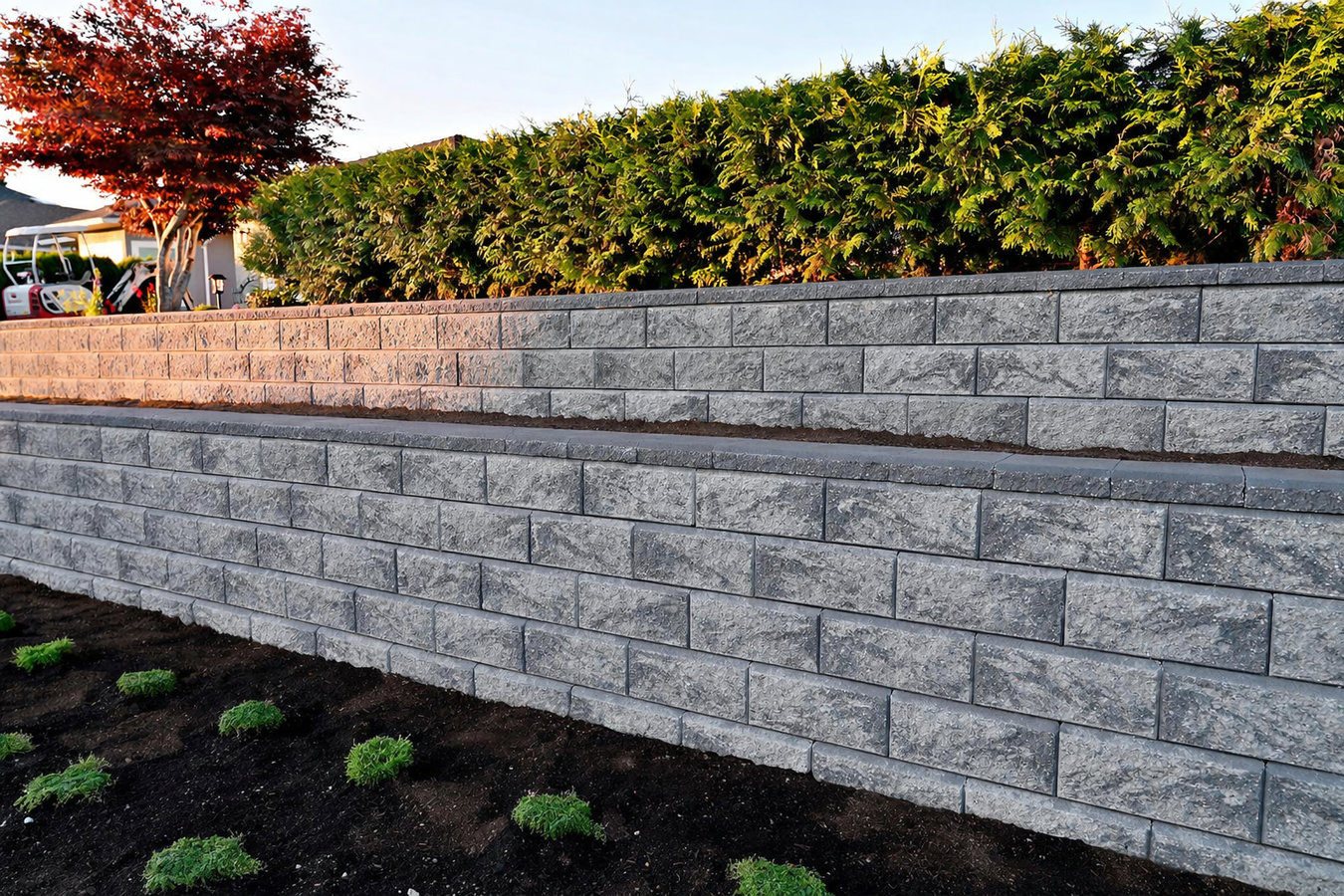
Sloped yards, eroding hillsides, and failing walls are common in Sonoma. We build concrete retaining walls with proper drainage and permitted footings — built to handle this valley's clay soils and wet winters.
Concrete retaining walls in Sonoma hold back sloped or hillside soil so it cannot erode, creep, or shift toward your home — most residential projects take two to five days of active work depending on wall length, height, and how much excavation the site requires.
Most homeowners call us after a wet winter reveals a slope that has moved more than they expected, or after they notice an existing wall starting to lean or crack along its face. Retaining walls are a practical necessity on many Sonoma properties — the hillside terrain around the Mayacamas and Sonoma Mountain ranges puts a significant share of residential lots on grade changes that require a wall to keep the yard functional.
When a wall is part of a larger grading or structural project, it often connects with work like slab foundation building — if you need a level pad for a structure on a sloped lot, a retaining wall typically comes first.
If you notice soil building up against your foundation, patio edge, or fence line after a wet winter, your slope is moving. Sonoma's clay-heavy hillside soils are particularly prone to slow creep when saturated. What starts as a few inches of soil movement can become serious erosion over several seasons. A retaining wall stops that movement before it reaches your home.
A wall that is visibly tilting away from the hillside, showing horizontal cracks across its face, or pulling away from adjacent structures is telling you it is under stress it was not designed to handle. These are structural warnings, not cosmetic ones. Catching this early — especially after a wet Sonoma winter — usually means a repair is still possible rather than a full rebuild.
If a significant portion of your backyard is too steep to use for anything — no flat area for a garden, no room for outdoor furniture — a terraced retaining wall system can convert that slope into flat, functional space. This is one of the most common reasons Sonoma homeowners invest in retaining walls, and the return in usable yard is often significant.
When a slope has no wall to redirect water, rainfall flows wherever gravity takes it — often toward your house or across your driveway. Standing water near your foundation or water sheeting across your driveway after a storm means a retaining wall combined with proper drainage can redirect that flow away from structures. Left unaddressed, water intrusion damages foundations over time.
Every retaining wall project starts with a site visit — not a phone estimate. We look at your slope, the soil, how water moves across your yard, and whether any structures are nearby that affect the design before we quote anything. From there, we handle excavation, footing installation, wall forming and pour, drainage installation, and backfill as a single coordinated project. We also pull the required building permit on your behalf and coordinate the inspection.
Drainage is built into every wall we construct. Behind the concrete, we install a gravel backfill layer and a perforated drainage pipe that channels water away from the wall face and out to a safe outlet. On Sonoma properties where clay soil is the norm, that drainage layer is the difference between a wall that lasts 50 years and one that starts to lean within five.
For properties with significant elevation changes, we build tiered or stepped wall systems rather than a single tall wall. This approach distributes soil pressure across multiple structures and often reduces engineering requirements. When your project also requires structural concrete below grade, our concrete footings service handles the anchoring work, and our slab foundation building service can create the level pad that often follows a wall project.
Cast-in-place concrete — the strongest and most durable option for hillside residential applications in Sonoma.
Multiple shorter walls stacked vertically — suited for steep slopes where one tall wall would require additional engineering.
Gravel backfill and perforated pipe built into every wall — essential for Sonoma properties with clay soils and wet winters.
We handle the City of Sonoma or Sonoma County permit application, inspection scheduling, and sign-off as part of every project.
Deep footings sized to local soil conditions — the base that determines whether your wall holds for decades or fails early.
Retaining walls combined with gravel or low-water landscaping to replace overgrown hillside vegetation — practical fire risk reduction.
Much of Sonoma sits on or near the slopes of the Mayacamas and Sonoma Mountains, and many residential lots have significant grade changes. Combine that terrain with thevalley's clay-heavy soils — the kind that swells when wet in winter and shrinks in the summer heat — and retaining walls become a practical requirement rather than a luxury upgrade for a large share of local homeowners.
Sonoma's Mediterranean climate also means walls go through a demanding seasonal cycle every year: saturated soil and heavy runoff from November through March, followed by months of dry heat that cause soil to pull away from the wall face. Walls built without drainage designed for this cycle tend to show stress within a few years. After the 2017 fires affected communities throughout the Sonoma Valley, many homeowners have also used retaining wall projects as an opportunity to replace flammable hillside vegetation with gravel or low-water hardscape — reducing fire risk while solving the erosion problem at the same time.
We complete retaining wall projects across the full range of communities we serve, including Sonoma, Petaluma, and Novato, where hillside lots and clay soil conditions make this one of our most requested services. Our crews are familiar with the permit offices and soil conditions across each of these communities.
We visit your property in person — a phone estimate for a retaining wall is rarely accurate. We look at the slope, soil, and drainage before quoting anything. You will have a written number within one business day of the visit.
We handle the building permit application with the City of Sonoma or Sonoma County, depending on your address. Permit timelines can run a few weeks, so we start that process as soon as you sign the contract — no waiting until the last minute.
The crew digs to the depth needed for a stable footing below the active soil layer, then pours the footing concrete and lets it set. This is the most disruptive phase — expect equipment and displaced soil — but it is what makes the wall last.
Once the footing has cured, the wall is formed and poured. Behind it, gravel and a perforated drainage pipe are installed to channel water out before pressure builds. A city inspector signs off on the completed work before we close the job.
Free on-site estimate. We handle the permit. No pressure — just a straight answer about what your property needs.
(707) 231-4240We have built retaining walls throughout the Sonoma Valley and know exactly how local clay soils behave through the wet and dry seasons. Every wall we build includes a gravel drainage layer and perforated pipe sized to the site conditions — not a one-size-fits-all spec borrowed from a flatter, drier climate.
Retaining walls in Sonoma require building permits, and we handle the application whether your property is inside city limits or in unincorporated Sonoma County. We coordinate the inspector visit and get the sign-off before closing the job — so the work is on the record when you sell or refinance.
The most common reason retaining walls fail early is an inadequate footing — either too shallow or undersized for the soil load it carries. We design footing depth and width specifically for your site, not a default spec, which is why our walls hold up through the seasonal stress that collapses walls built to a generic standard.
We work on retaining wall projects from Sonoma and Petaluma to Novato, Napa, and Mill Valley. That range of hillside terrain across the North Bay means we have seen most soil and slope conditions the region produces. Verify any contractor you consider at the California Contractors State License Board before signing anything.
Every one of those points comes back to the same thing: a retaining wall is a structural element, not a surface treatment. Building it right the first time — with the correct footing, drainage, and permitting for Sonoma conditions — is what separates a wall that lasts 50 years from one that needs attention within five. For additional defensible space guidance relevant to Sonoma hillside properties, see the CAL FIRE defensible space program.
When your project includes a level pad or attached structure, a poured concrete slab sets the foundation for everything that follows.
Learn moreProperly sized footings anchor walls and structures to stable soil — the step that determines whether a wall holds for decades or fails in a few years.
Learn moreSonoma's wet winters arrive in November. Call or submit a free estimate request now and we will schedule a site visit before the ground gets saturated again.