Loading...
Serving Sonoma, CA and surrounding areas. (707) 231-4240
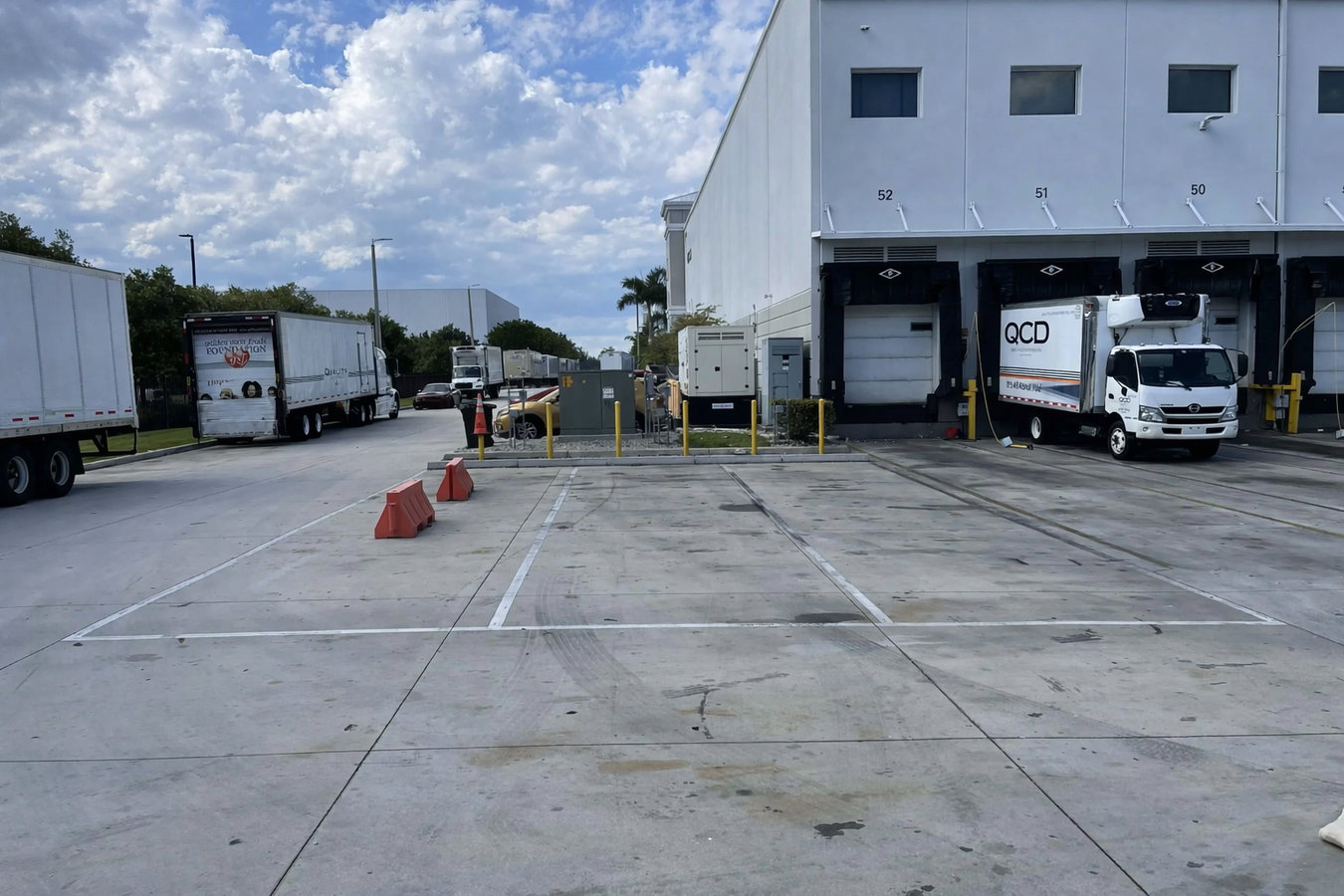
Gravel ruts in summer, mud in winter, and puddles that never drain — a concrete parking lot built for Sonoma soil and climate ends all of that for good.
Concrete parking lot building in Sonoma means removing the old surface, grading the ground for drainage, compacting a gravel base, and pouring a reinforced slab — most residential and small commercial lots take two to five days of active work, plus seven to ten days of curing before vehicles can return.
If you are currently parking on gravel, compacted dirt, or an aging asphalt surface that is breaking apart, the core problem is almost always the same: the base underneath was never prepared correctly for Sonoma's expansive clay soils, and rain has been working its way in season after season. Patching the top fixes nothing if the ground below is still moving.
Parking lot projects are often done alongside a new concrete driveway or entry approach, which lets both surfaces be graded, poured, and finished together for a cleaner result and lower combined cost.
Cracks wider than a quarter inch, or sections that are lifting, crumbling, or breaking off in chunks, mean the base underneath has shifted or failed. Patching is no longer a cost-effective fix at this stage. In Sonoma, clay soil movement is the leading cause of this kind of widespread failure, and it only gets worse with each wet season.
If your parking area holds water after even a light Sonoma rain, the surface is not draining correctly — either it was never graded to slope away from structures, or settling has created low spots over time. Pooling water accelerates surface damage and can push moisture toward your foundation or garage. A new lot built with proper drainage slope solves this permanently.
Parking on loose material means dust all summer and mud from November through March, plus ruts that form and reform every few months regardless of how much material you add. Many Sonoma properties — especially those with guest accommodations or home-based businesses — make this upgrade specifically to improve both function and first impressions.
Concrete poured in the 1980s and 1990s was often installed with thinner slabs and less attention to base preparation than current standards require. If your lot is that age and showing widespread surface wear, fading, or multiple repaired cracks, a full replacement will cost less over the next decade than continued patching of an aging surface.
We build new concrete parking lots and replace surfaces that have reached the end of their life. Every project starts with a site visit to assess drainage, soil conditions, and how the space will be used — a lot that will see delivery trucks or heavier vehicles needs a thicker slab than one used only by passenger cars, and we size the work accordingly before the first shovel goes in.
Parking projects are frequently combined with other flatwork on the same property. When a new lot connects to an existing concrete driveway, we match the surface finish and grade the transition so water moves cleanly from one surface to the other. If the lot borders a pedestrian area, we can tie it in with a new concrete sidewalk or path so the whole surface flows together — one project, one mobilization, one clean result.
Control joints are cut or formed into every lot we pour. These are the intentional lines you see at regular intervals in concrete surfaces — they give the slab a controlled place to accommodate seasonal movement, so any cracking happens at the joint rather than randomly across the surface. Properly spaced joints are one of the most important details that separates a lot that lasts 30 years from one that needs repairs in five.
Best for properties converting a gravel, dirt, or decomposed granite area to a permanent paved surface for the first time.
Best for owners replacing an aging or failed concrete or asphalt lot where the base needs to be rebuilt from the ground up.
Best for properties that regularly see delivery trucks, agricultural vehicles, wine transport, or RVs — sized and reinforced accordingly.
Best for hospitality, vacation rental, or residential properties where curb appeal matters as much as function.
Sonoma Valley sits on clay-heavy soils that expand in the wet season and shrink in summer — a cycle that repeats every year and puts real stress on any surface poured on top of it. A contractor who does not account for this during base preparation is setting your lot up to crack within a few years. Proper base work here means excavating deep enough to get below the most unstable material, compacting a gravel layer that stays stable through Sonoma's seasonal extremes, and building in enough drainage slope so water leaves the surface instead of sitting on it. The Portland Cement Association notes that base preparation is the single largest factor in how long a concrete surface lasts.
Sonoma County and the City of Sonoma participate in regional stormwater management programs that affect how new impervious surfaces are designed. If your lot exceeds certain size thresholds, you may be required to manage runoff on your own property rather than sending it to the street — something the Sonoma County Water Agency details through its stormwater program. We factor these requirements into every project design so you are not dealing with compliance issues after the pour is done.
We serve homeowners and small businesses throughout the Sonoma area, including Petaluma, Santa Rosa, and Napa. Whether you are running a wine country accommodation, a small business, or simply want a cleaner parking area at your home, we know the soil conditions, permit offices, and seasonal scheduling that apply to your property.
We visit your property before giving you any numbers — a quote over the phone without a site look is a red flag from any contractor. We check drainage, soil, and intended use, then give you a written estimate that breaks down exactly what is included. You will hear back within one business day of your first contact.
We apply for any required permits through the City of Sonoma or Sonoma County on your behalf. For most straightforward projects, permit review takes one to three weeks. We handle the paperwork and keep you updated so you are not chasing down answers.
The crew removes the old surface material, excavates to the correct depth, and compacts a gravel base layer. This step takes the most time and is the most important — Sonoma's clay soils make thorough base work the difference between a lot that lasts and one that does not.
Concrete is poured, spread, leveled, and finished with control joints cut or formed into the surface. Plan to keep all vehicles off the new surface for at least seven days. Your contractor may apply a curing compound during warm weather to help the slab reach full strength evenly.
Free on-site estimate. Written quote before any work starts. No pressure.
(707) 231-4240We have poured concrete across the valley floor and hill properties where clay soil movement is a daily reality. Our base preparation goes deeper and wider than the minimum because we know what shortcuts cost when the rains return. That local knowledge does not come from a manual.
We have pulled permits through the City of Sonoma Building Division and Permit Sonoma repeatedly for parking projects of all sizes. We know what the reviewers look for, and we submit complete applications that do not come back with correction requests. Your project starts on schedule.
Every lot we build is graded to move water away from structures and, where Sonoma County stormwater rules apply, we design the drainage features the county requires. You will not receive a compliance notice after the pour because we account for these requirements before we quote the job. The{' '}Federal Highway Administration confirms that drainage design is as important as slab thickness for long-term pavement performance.
We work across all 12 service areas in the North Bay — from Sonoma and Napa to Novato, Santa Rosa, and Vallejo. If your parking project spans multiple properties or you manage several sites in the region, one call handles all of it. Local references from completed Sonoma Valley projects are available on request.
A concrete parking lot is a long-term investment, and the details that determine whether it lasts 10 years or 40 are mostly invisible once the job is done. We do the base work correctly the first time so you are not digging up a failed slab and starting over in five years. That is the promise behind every parking lot we build in Sonoma.
Connect your new parking area to a professionally graded driveway approach built to the same standard.
Learn moreAdd a pedestrian path that ties the parking surface to your entry or property perimeter.
Learn moreContractor schedules in Sonoma book out fast once the rains stop — call now or submit the form and we will be in touch within one business day.