Loading...
Serving Sonoma, CA and surrounding areas. (707) 231-4240
Sunken slab making your floors uneven and your doors stick? We lift settled foundations in Sonoma using mudjacking and foam injection, with permits handled and the cause addressed so the repair actually lasts.
Foundation raising in Sonoma lifts a sunken or uneven concrete slab back to its original level position by injecting material beneath it to fill voids and push the concrete up — most residential jobs take one to two days depending on the method and the size of the affected area.
Homeowners in Sonoma most often call us when they notice floors that feel tilted, doors that stick without obvious cause, or cracks forming near window and door frames. These are signs that the soil underneath your slab has shifted, compressed, or washed away — a problem that is especially common here because of Sonoma Valley's clay-heavy soils and active seismic history. The 2014 South Napa earthquake caused foundation damage across the North Bay, and many homes that appeared fine afterward developed gradual settlement problems in the years that followed.
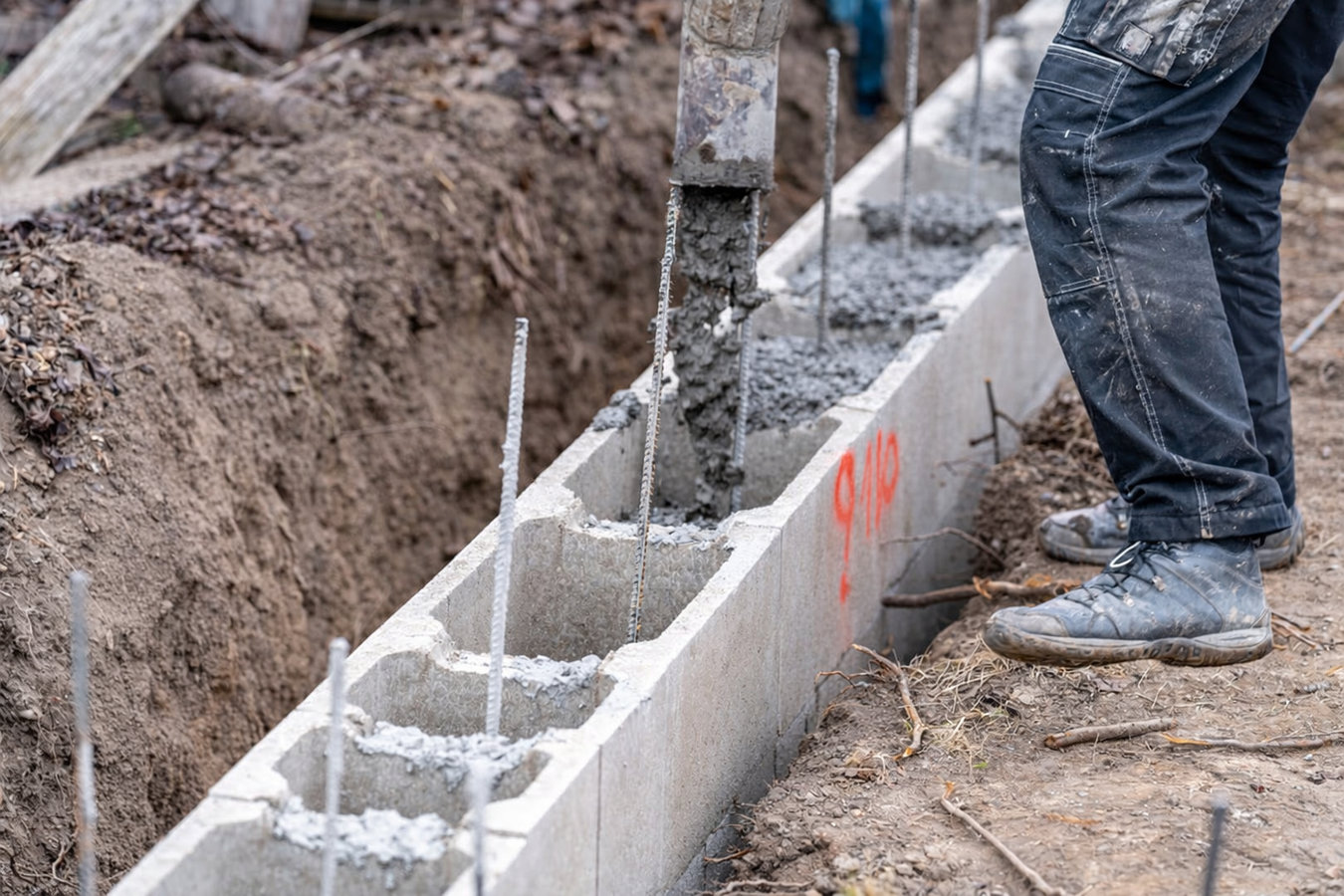
When foundation damage is more extensive and involves the full concrete base of a structure, that work falls under our foundation installation service, which handles full replacement with new forming, reinforcement, and permitted inspection from the ground up.
If interior doors that used to swing freely now drag on the floor or refuse to latch, your foundation may have shifted beneath them. The same goes for windows that are suddenly hard to open or that show gaps at the corners. In Sonoma, this is one of the earliest and most reliable signs that something has moved underground — often following a wet winter season when clay soils have swollen and then contracted.
Diagonal cracks running from the corners of door frames or windows are a classic sign of uneven foundation settlement. In Sonoma, these cracks often appear or worsen after the wet winter season, when clay soils have cycled through expansion and contraction. If you see new cracks appearing each spring, or cracks that grow visibly from year to year, that pattern is worth taking seriously.
Walk slowly across your floors and pay attention to any areas that feel like they tilt or dip. If a marble placed on the floor rolls consistently in one direction, the slab beneath may have dropped. This is especially common in Sonoma homes built on hillside lots or near drainage channels, where soil erosion is a known issue.
Sonoma's rainy season can reveal drainage problems that accelerate foundation sinking. If you see water sitting against your foundation for hours or days after a storm, that moisture is working its way into the soil below and can wash away the support your slab depends on. Addressing the drainage and the foundation together gives you the most durable result.
Every foundation raising job starts with an on-site assessment — not just a price quote. We look at the concrete condition, probe the soil, check drainage patterns, and identify what caused the sinking before recommending a method. This matters because a repair that lifts the slab without addressing the underlying soil problem will not hold through Sonoma's wet winters.
We use two primary methods depending on what your site needs. Mudjacking pumps a cement-and-soil slurry beneath the slab to fill voids and push the concrete up — it is a proven approach and typically the lower-cost option. Polyurethane foam injection uses a lightweight expanding foam that cures within about 15 minutes, makes the surface walkable the same day, and tends to hold up better in areas with significant moisture fluctuation. For many Sonoma homes, foam is the better long-term choice precisely because of the wet-dry soil cycles the valley produces every year.
After the lift, drill holes are patched with matching concrete mix and the work area is cleaned up. If a permit is required through the City of Sonoma, we handle the application and coordinate the inspection. For situations where the foundation needs full replacement rather than lifting, our foundation installation service handles that scope from excavation through the permitted pour. When the foundation also needs supporting footing work below grade, our concrete footings service addresses that as a coordinated scope.
Best for larger areas where cost is a primary factor and soil conditions are relatively stable. Pumps a cement-soil slurry beneath the slab.
Ideal for Sonoma's wet-dry climate. Lighter than mudjacking, cures in minutes, does not erode, and extends the life of the repair.
Fills hollow spaces beneath a slab without lifting it — used when the concrete is still level but the soil underneath has pulled away.
Addresses the water patterns causing soil erosion so the lifted foundation does not sink again the following winter.
Drill holes are filled with matching concrete mix and the work area is cleaned before we leave — no visible trace of the process.
We pull the required permit through the City of Sonoma and coordinate the city inspector review so the repair is on record.
Sonoma Valley sits on some of the most active clay soils in Northern California. Clay absorbs water and expands during the wet season, then shrinks and pulls back as temperatures rise in summer. That annual swelling and contraction cycle creates voids beneath concrete slabs over time — which is the most direct cause of the foundation sinking we see on properties throughout Sonoma. Homeowners in Santa Rosa and Petaluma deal with the same soil conditions, but properties right in Sonoma often sit on older foundations that were never designed with these movements in mind.
Seismic activity adds another layer of complexity here. Sonoma County sits near active fault systems, and the 2014 South Napa earthquake caused widespread foundation disruption across the North Bay — including in Sonoma. Homes that appeared undamaged after that event sometimes developed settlement issues in the years that followed, as ground movement had quietly opened up voids beneath slabs without causing obvious surface damage right away. The USGS earthquake hazards program documents this kind of delayed soil response in seismically active regions.
Many homes near Sonoma Plaza and throughout the historic downtown were built in the 1950s and 1960s on foundations that predate modern seismic and soil-management standards. These properties benefit most from the assessment-first approach we use, because older foundations sometimes reveal conditions that change which repair method is appropriate. We serve homeowners throughout Sonoma, and also work regularly in Napa where the soil and seismic context is nearly identical.
When you call, we ask a few basic questions about what you are seeing — sticking doors, uneven floors, visible cracks. We schedule an on-site visit, typically within a few days. We reply to all inquiries within 1 business day.
We walk the property, assess the concrete condition, probe the soil, and check drainage patterns. The goal is to understand why the foundation moved — not just how to lift it. You receive a written estimate that explains the recommended method and total cost before you commit to anything.
If the City of Sonoma requires a permit for your project, we handle the application on your behalf. Permit timelines vary; we will tell you upfront how long to expect. Once permits are in hand, we confirm your start date and explain exactly what to clear from the work area.
The crew drills small holes, injects the lifting material, and monitors the slab as it rises back to level. Most residential jobs are complete in one to two days. Drill holes are patched, the area is cleaned, and if a permit was pulled, the city inspector signs off — giving you a documented record of the completed repair.
Free on-site assessment, written estimate, no obligation. We explain what we find in plain terms before you decide anything.
(707) 231-4240A lift that does not address what caused the sinking will not hold through Sonoma's wet winters. Before we recommend a method or a price, we evaluate soil conditions and drainage on your specific lot. That assessment is what makes the difference between a repair that lasts 8 to 10 years and one that needs to be redone in two.
Foundation raising in Sonoma requires a building permit in most cases. We handle the application through the City of Sonoma Community Development Department and schedule the inspector review. You end up with a documented repair on record — which protects you when you sell your home or make an insurance claim. The{' '}California Contractors State License Board requires licensed contractors to disclose permit requirements to homeowners.
We hold an active California Contractors State License Board C-8 concrete contractor license and carry full liability and workers' compensation coverage. You can verify our license at cslb.ca.gov in under two minutes. Beyond the paperwork, we are a local operation — the same people you call are the people who show up on your property.
We have worked on foundations throughout Sonoma and the surrounding valley — from historic downtown properties near Sonoma Plaza to newer homes on hillside lots with drainage challenges. That local experience means we recognize the soil and seismic conditions on your street before we even walk the site.
Foundation work is one of the highest-stakes repairs a homeowner can make. You want a contractor who finds the actual cause, explains it clearly, pulls the permit, and does the job right the first time. That is the standard we hold ourselves to on every Sonoma property we work on. Read more about our approach on our about page.
When a foundation needs full replacement rather than just lifting, we handle the complete installation from excavation and forming through the permitted pour and final inspection.
Learn moreFootings provide the below-grade concrete base that a raised foundation or wall system sits on — often needed when raising work reveals that the existing footing has deteriorated.
Learn moreEvery season you wait, Sonoma's clay soils and wet winters can make the problem worse. Call us now or request a free estimate online — we respond within 1 business day.