
Loading...
Serving Sonoma, CA and surrounding areas. (707) 231-4240
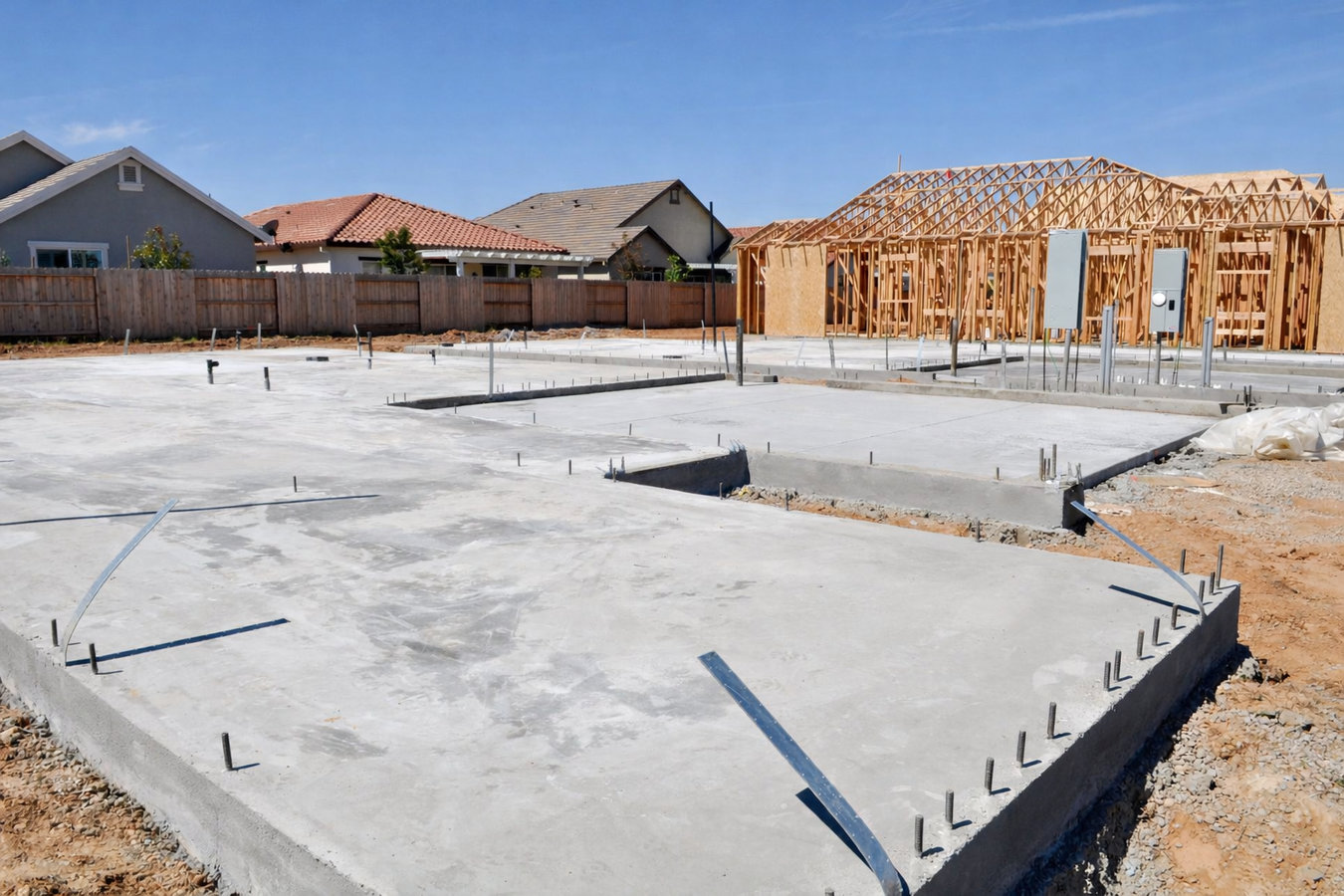
Old or missing foundation holding your project back? We install full concrete foundations in Sonoma built for earthquake country, clay soils, and the permit process that protects your investment long term.
Foundation installation in Sonoma covers the full concrete base of your home — from excavation and forming through the pour, curing, and final inspection — and most residential projects take one to three weeks of active work before the foundation is ready for framing to begin.
Homeowners typically call us for one of two reasons: they are starting a new construction project and need a foundation built from scratch, or they are replacing an older foundation on a home that was built before modern seismic and drainage standards existed. Sonoma has a significant share of older housing stock — many homes in and around the historic downtown were built in the mid-20th century on foundations that were never designed for earthquake loads or the seasonal clay-soil movement this area produces.
When a foundation project also involves restoring the height of an existing structure, that work falls under our foundation raising service, which handles the lift and new base as a coordinated scope.
If doors in your home have started sticking, dragging along the floor, or refusing to latch properly, the foundation beneath them may have shifted. In Sonoma, this happens gradually as clay-heavy soil expands and contracts through wet winters and dry summers. It is easy to dismiss as a humidity issue, but if it is happening in multiple rooms or getting worse each year, the foundation is worth a professional look.
Diagonal or stair-step cracks in exterior stucco or interior drywall — especially near the corners of windows and doors — are a classic sign of foundation movement. Hairline cracks from normal settling are common in older Sonoma homes, but cracks that are widening, running diagonally, or appearing in multiple locations at once suggest the foundation is moving unevenly rather than simply aging.
Walk slowly through your home and notice whether the floor feels level. If you notice a slope, a soft spot, or a section that bounces slightly when you walk on it, the structure underneath may be compromised. In homes with raised foundations — common in Sonoma's older neighborhoods — this can mean the foundation walls or the wood framing on top of them has deteriorated or shifted.
If your Sonoma home was built before the 1980s and you have never had the foundation professionally evaluated, that alone is a reason to schedule a look. Many homes in Sonoma's historic core sit on foundations that were not designed for modern seismic standards. You may not see obvious symptoms yet — but an inspection can tell you whether you are quietly heading toward a costly problem.
Foundation installation is not a single task — it is a sequence of coordinated steps that all have to go right for the result to hold. We handle the entire process: utility marking, excavation to the required depth, gravel base, forming, rebar placement, moisture management, the pour itself, and curing. We also manage the permit application through Permit Sonoma or the City of Sonoma Building Division and schedule the required inspections at each stage, including the pre-pour inspection that must happen before concrete is placed.
Replacing a foundation on an older Sonoma home is a different scope from pouring a new one. The house typically needs to be temporarily supported while the old foundation is removed — a process that requires experience and the right equipment. We do this work regularly on pre-1980s homes throughout Sonoma's historic neighborhoods and understand what to expect from structures of that era.
For new construction where the primary foundation type is a concrete pad rather than a raised system, our slab foundation building service handles that scope. And when the foundation project also requires structural lifting, our foundation raising service covers the lift and rebuild as one coordinated project.
Full foundation installation for new homes, ADUs, and commercial structures on both level and sloped Sonoma lots.
Removal of older, unreinforced, or damaged foundations on existing homes — including temporary structural support during the work.
Concrete stem wall foundations that create a crawl space — common in Sonoma's older neighborhoods and easier to access for future plumbing and wiring work.
New foundations on older Sonoma homes designed to meet current earthquake safety requirements, including anchor bolt placement and hold-down hardware.
We handle the permit application, track the review, and coordinate every required inspection through Permit Sonoma or the City of Sonoma building department.
Gravel base design and perimeter drainage to direct water away from the foundation perimeter — especially important during Sonoma's wet winters.
Sonoma sits near several active fault systems, including the Rodgers Creek Fault, which runs just east of the city. That proximity makes seismic design requirements not just a legal checkbox but a genuine structural concern. California requires that foundations in this area be engineered to move with the ground during an earthquake without failing — deeper footings in some cases, specific rebar patterns, and connections between the foundation and the framing above that allow controlled movement rather than catastrophic failure. The California Earthquake Authority has identified older Sonoma homes as a priority for seismic foundation upgrades, and we regularly work on exactly that kind of project.
The clay-heavy soils throughout the Sonoma Valley add a second layer of complexity. Clay soils expand when they absorb water in winter and shrink when they dry out in summer. Over time, that seasonal movement puts stress on any foundation that was not designed to handle it. A soil assessment before design, and a foundation spec that responds to what the ground here actually does, is what separates a 50-year foundation from one that starts showing problems within a decade.
We install foundations throughout all 12 cities in our service area. In Napa, foundation replacement on older mid-century homes is among the most common projects we see. In Novato, hillside lots bring specific grade and drainage challenges to every foundation pour. And in American Canyon, new residential construction on expanding lots has kept foundation installation work steady across the North Bay.
We get back to you within one business day. You will talk to someone who knows Sonoma's permit process and soil conditions. We ask about your project, your timeline, and whether an existing foundation is being replaced or you are starting from scratch.
We come to your property, assess the existing conditions, take measurements, and discuss the foundation type that fits your project. You get a written estimate that breaks out labor, materials, and permit fees — with no obligation to proceed.
We submit the permit application to Permit Sonoma or the City of Sonoma and track the review timeline. Once approved, we mark utilities, excavate to the required depth, and begin forming. Expect heavy equipment and disruption to the immediate work area for several days during this phase.
An inspector verifies the rebar and formwork before we pour. After the concrete is placed and cured — at least seven days before any significant load is placed on it — the final inspection is scheduled. Once it passes, we walk you through the completed work and hand over the permit record.
Free site visit. No obligation. We pull the permits and coordinate every inspection.
(707) 231-4240Foundation work in Sonoma falls under either the City of Sonoma Building Division or Permit Sonoma, depending on your property location. We work with both regularly. We submit the application, track the review, and coordinate the inspections — so your project timeline does not slip because of a missed permit step.
Every foundation we install in Sonoma County is designed with California's seismic requirements in mind. That means the right footing depth for your soil, the correct rebar layout, and anchor bolt placement that connects your foundation to the structure above in a way that handles ground movement. We do not charge extra for this — it is simply how we build.
Replacing a foundation on an older Sonoma home requires temporary structural support, demolition of the existing concrete, and a new design that meets current standards. We have done this work throughout the city's historic neighborhoods and understand the complications older construction brings — offset load points, original materials, and limited access — before we give you a quote.
Before hiring any foundation contractor in California, verify their license at the California Contractors State License Board. An active license means the contractor is legally authorized to do this work, carries required insurance, and can be held accountable. We give our license number without hesitation — any contractor who hesitates on that question is worth questioning.
After the wildfire years in Sonoma County, homeowner insurance in this market has changed. Foundations with a clean permit record — inspected and documented — give insurers proof of structural integrity that can matter at renewal time. We make sure you leave every project with that documentation in hand.
When your project calls for a slab-on-grade concrete pad as the primary foundation type, this service handles the pour, rebar, and permitted inspection as a standalone scope.
Learn moreFor existing homes where the foundation needs to be lifted or rebuilt to address settling, seismic vulnerability, or water intrusion, foundation raising restores stability without a full demolition.
Learn morePermit season books up fast — reach out now to lock in your project start date before the next construction window fills.