
Loading...
Serving Sonoma, CA and surrounding areas. (707) 231-4240
Cracked, heaved, or uneven sidewalk? We build and replace concrete walkways in Sonoma with proper permits, clay soil base prep, and solutions for tree root damage that actually hold.
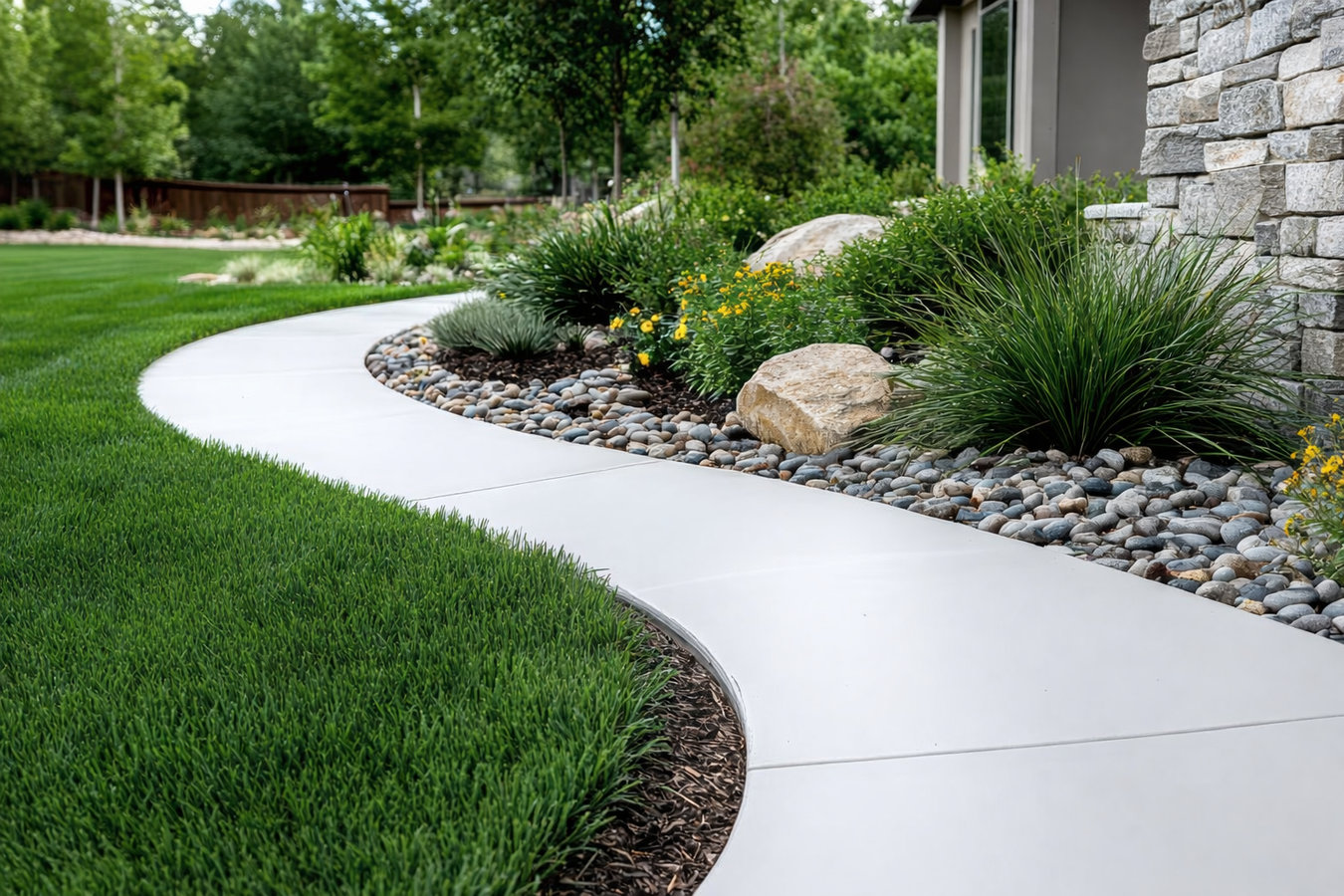
Concrete sidewalk building in Sonoma involves removing the old surface, preparing a stable compacted base for local clay soils, and pouring a new slab — most residential sidewalk jobs take one to three days from demo to finished pour.
Sonoma's older neighborhoods have a lot of sidewalks that are cracked, heaved, or uneven because of clay soil movement and mature tree roots pushing up from below. If your walk has sections that catch a shoe or pool water after rain, that's not just cosmetic — it's a safety issue and a liability. Replacing it correctly means addressing what caused the problem in the first place, not just pouring new concrete on top of the same unstable ground.
Concrete sidewalk work often goes hand in hand with other hardscape projects. Many homeowners who replace a front walkway also update their concrete driveway at the same time, or add concrete steps where a path meets a grade change. Combining projects saves on mobilization costs and keeps the finished look consistent.
If one slab is noticeably higher than the one next to it, that's a trip hazard — and in Sonoma, it's often caused by tree roots pushing up from below. You can feel it when you walk across: a slight bump or catch underfoot. Once a slab has heaved significantly, patching the surface won't fix the underlying cause, and replacement is usually the right call.
Hairline cracks are common and often cosmetic, but cracks wide enough to fit a pencil into — or cracks that run all the way through the slab — signal that the concrete has lost its structural integrity. Sonoma's clay soils expand and contract with the seasons, and over time that movement can turn small cracks into large ones that keep growing if you wait.
A properly built sidewalk slopes slightly so water runs off to the side. If you notice puddles forming on your walk after winter rains, the slab may have settled unevenly or was never graded correctly. Standing water accelerates surface wear, makes the walk slippery, and can migrate toward your foundation if the drainage issue isn't corrected.
If the top layer of concrete is peeling away in chips or flakes, the surface has started to deteriorate — either from age or an original pour that wasn't done well. Once the surface starts breaking down, it tends to accelerate. A crumbling walk is harder to keep clean and safe, and the damage reaches a point where patching no longer makes economic sense.
We build and replace concrete sidewalks for Sonoma homeowners from start to finish: pulling permits, removing old concrete, addressing any tree root complications, compacting the base to handle clay soil movement, and pouring a new slab with proper control joints and finish. Whether you need a short front walkway replaced or a longer path connecting a new ADU to the main house, we handle the full project.
Many homeowners coordinate sidewalk work with adjacent hardscape projects. If your front walk needs to be replaced, this is often a good time to look at your concrete driveway — both surfaces share the same soil conditions and often the same age. Similarly, if your sidewalk meets a grade change, adding proper concrete steps at the transition point creates a safer, more finished result than a sloped patch. We can scope both projects together and build them in a single mobilization.
We choose the right thickness for how the surface will be used. Standard foot-traffic sidewalks are poured four inches thick. Areas that will see occasional vehicle crossings — like driveway aprons or paths to a detached garage — are poured six inches thick to handle the load without cracking. Getting this right upfront costs less than repairing a cracked slab later. The Portland Cement Association provides solid reference material on residential concrete thickness and base requirements if you want to dig deeper.
For cracked, heaved, or deteriorating slabs — we remove the old concrete, address root or soil issues, and pour a new surface built to last.
For new paths connecting structures, ADUs, or outbuildings, built to the correct width, slope, and thickness from the ground up.
Thick-pour sections that bridge your sidewalk and driveway, built to handle vehicle weight without cracking at the joint.
Broom, exposed aggregate, or pattern finishes that improve traction and complement the character of your home and neighborhood.
Sonoma's older neighborhoods are lined with mature oaks and other large trees that residents love — and those same trees send roots under sidewalks, causing heaving and cracking that can become trip hazards. We walk every site before we quote, and if there's a root situation that could undermine your new walk, we talk through your options before any concrete is poured. Ignoring roots and just pouring over them leads to the same problem in a few years.
Much of the Sonoma Valley sits on clay-heavy soils that swell when wet and shrink when dry. A sidewalk built on this soil without proper base preparation will crack and shift within a few years — which is why so many slabs in older Sonoma neighborhoods look the way they do. We account for local soil conditions in how we prepare the base, adding more compacted gravel than a sandier region would need, which adds a little to the cost but a lot to the lifespan.
The City of Sonoma requires permits for most sidewalk work that touches the public right-of-way, and the permit process adds a week or two to the timeline. We handle the paperwork and coordinate with the city's Public Works office so you don't have to. We also serve homeowners in nearby Petaluma, Santa Rosa, and Napa who face similar permit and soil conditions.
We come to your property to measure the area, look at the ground conditions, and assess any tree roots or drainage issues. You'll receive a written estimate within one business day of the visit. We don't quote sidewalk work based only on square footage — too many variables affect the job to give you an honest price without seeing the site.
If your project requires a city permit — which is common for any sidewalk touching the public right-of-way — we handle the application and coordinate with Sonoma's Public Works department. Permit timelines can range from a few days to a couple of weeks depending on the city's current workload. We give you a realistic start date that accounts for this from the beginning.
The crew removes the existing sidewalk and hauls away the debris, then excavates to the right depth, compacts the soil, and lays a gravel base. If tree roots need to be addressed, we handle that at this stage. This prep work determines whether your new sidewalk lasts 20 years or 5 — it's the most important part of the job.
We pour the concrete, add control joints to manage cracking, and finish the surface to the agreed texture. The crew marks off the area and lets you know when it's safe to walk on — usually 24 to 48 hours. Before leaving the job site, we walk the finished work with you and answer any questions about the curing period and maintenance.
We respond to all inquiries within 1 business day. No obligation, no pressure — just a clear site visit, a written estimate, and honest answers about what your project actually needs. Submit the form and someone from our office will call to schedule a time that works for you.
(707) 231-4240Most sidewalk work in Sonoma requires a permit from the city, and navigating that process isn't something homeowners should have to figure out on their own. We handle the permit application, submission, and city coordination for every job that needs one, and we build the permit timeline into your project schedule from day one. Learn more at the City of Sonoma Public Works.
We walk every site before we quote, and if there's a tree root or soil issue that could undermine your new walk, we tell you about it before any money changes hands. That's the difference between a sidewalk that lasts and one that looks great for 18 months and then fails for the same reasons the old one did.
We've replaced and built sidewalks throughout Sonoma Valley, from homes near the Plaza to newer streets on the north side of town. That local experience means we know what Sonoma's city inspectors look for, what the soil conditions typically require, and which neighborhoods have the most active root problems. According to the UC Cooperative Extension, managing tree root conflicts in urban hardscape requires site-specific assessment — which is why we always visit before quoting.
One of the most common frustrations homeowners have after concrete work is not knowing what's normal during the curing period. Before we leave the job site, we walk you through exactly what to expect in the days and weeks ahead — when it's safe to walk on, when to keep vehicles off it, and what minor surface variation is completely normal versus something to call us about.
We show up, we communicate clearly, and we don't skip steps on the base prep because it's invisible work. That's the kind of contractor Sonoma homeowners call back for the next job — and that's the reputation we've built in this valley.
Replace or build a full concrete driveway with proper base prep for Sonoma's clay soils, timed around local weather windows.
Learn moreAdd safe, durable concrete steps where your walkway meets a grade change — built to match your new sidewalk and handle heavy foot traffic.
Learn moreCall today or submit the contact form — we visit your site, assess any root or soil issues, and give you a written estimate within one business day. The sooner you address a failing sidewalk, the less it costs to fix.