
Loading...
Serving Sonoma, CA and surrounding areas. (707) 231-4240
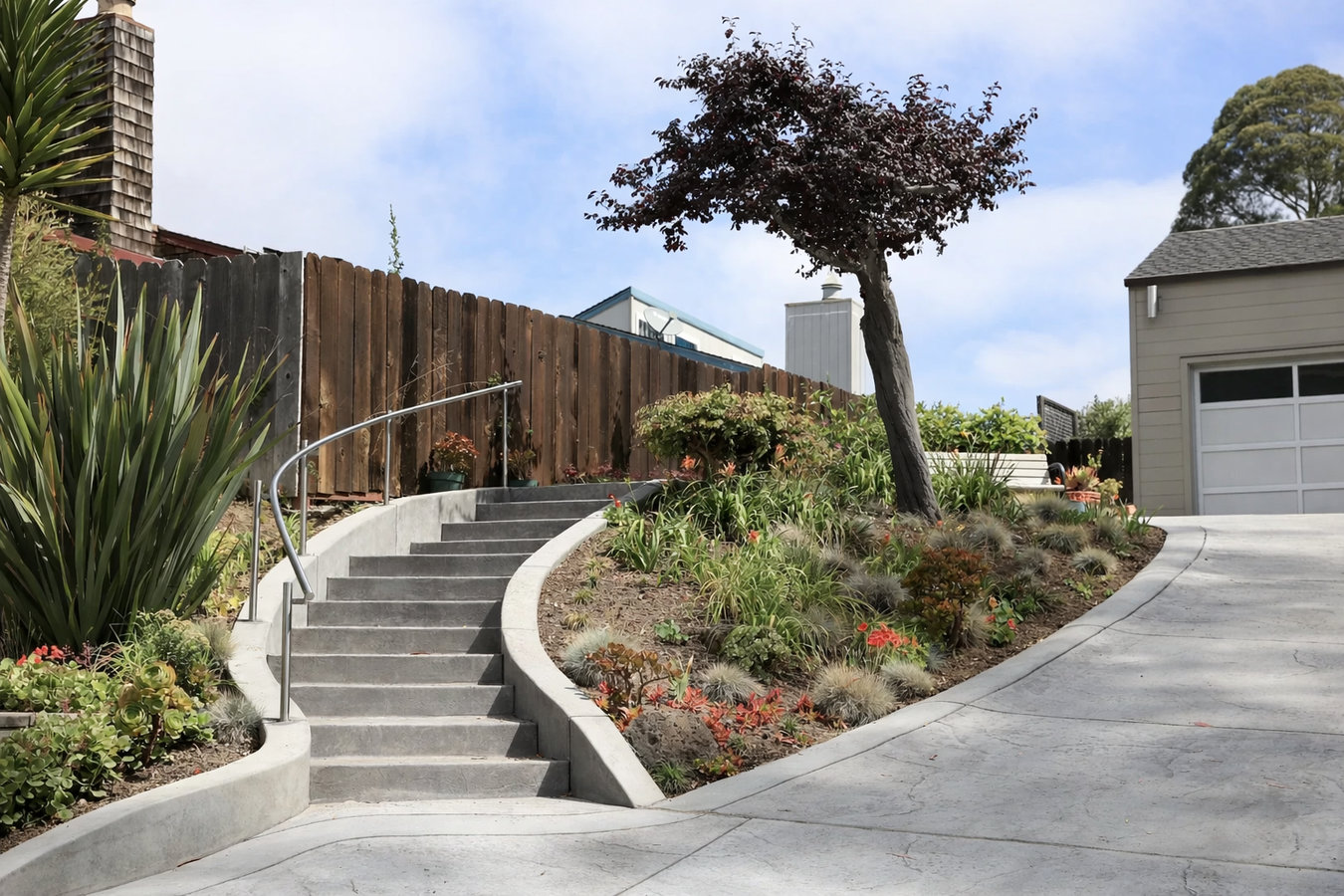
Cracked or tilted entry steps are a fall risk and a curb-appeal problem. We build new steps on a solid base that handles Sonoma clay soils and keeps your entry level season after season.
Concrete steps construction in Sonoma means pouring a permanent, formed set of stairs at your home's entry or garden path — most residential projects take one to two active work days, plus one to two weeks for permit processing before the crew starts.
If your current steps are cracking, tilting, or crumbling at the edges, the problem usually starts below the surface. Sonoma Valley's clay-heavy soils shift with every wet season, and steps poured without a properly compacted gravel base will slowly tilt and crack until the underlying movement is addressed. A patch job on a step that is already out of level is temporary — the ground keeps moving underneath.
New entry steps are often done at the same time as a concrete sidewalk or front path, so the materials, finish, and drainage all work together. That combined approach usually saves time and money compared to doing each project separately.
Cracks wider than a hairline that have been growing over one or two wet seasons mean the concrete is under stress. Sonoma winters give water a direct path into those cracks, and once moisture is inside the slab, the damage accelerates each season. Steps with spreading cracks usually need replacement, not patching.
Stand at the bottom of your steps and look across the surface of each one. If any step has dropped lower than the others or tilted to one side, the ground underneath has moved. This is especially common in Sonoma's clay-heavy soils, where seasonal swelling and shrinking gradually push concrete out of position. Tilted steps are a tripping hazard that gets worse without intervention.
The edges and corners of entry steps take the most foot traffic and show wear first. If corners are chipping off or the edge crumbles when you press on it, the concrete has weakened throughout the slab — not just at the surface. Surface patching can buy a little time, but steps in this condition usually need full replacement within a few years.
If a step shifts slightly under your weight or makes a hollow sound when you tap it, it has separated from the base beneath it. This happens when the sub-base was not properly compacted at installation, or when clay soil movement has created a void underneath. A step that moves is a safety risk and should be evaluated by a contractor right away.
We build new entry steps from scratch and replace existing steps that have reached the end of their useful life. Every project starts with removing unstable soil, packing in a compacted gravel sub-base, and setting forms at the correct height and depth so each step is even. The pour is finished with a texture that provides grip in wet weather — the kind of damp morning that arrives with Sonoma fog is exactly when safe footing matters most.
Concrete steps at the front entry are frequently done as part of a broader project. If your property also needs a new front path or a repaired concrete sidewalk, we can combine that work in a single mobilization to save on setup costs. For sloped lots where grade changes make navigation difficult, pairing new steps with a concrete retaining wall is a common solution that addresses both safety and drainage in one project.
Decorative finishes — broom texture, exposed aggregate, and stamped patterns — are available on any steps project. These options let the new steps match or complement your home's exterior without the cost of natural stone, and they wear well under the foot traffic a front entry receives every day.
Best for properties adding a formal entry for the first time or replacing steps that were removed during other construction.
Best for homeowners replacing cracked, tilted, or crumbling steps where the base also needs to be rebuilt from the ground up.
Best for sloped yards where grade changes need safe, permanent footing between different levels of the outdoor space.
Best for homeowners who want a stamped, exposed-aggregate, or broom-finish surface that improves curb appeal alongside function.
A large share of Sonoma's housing stock was built between the 1940s and 1970s — homes that are now 50 to 80 years old with original entry steps that have never been replaced. Concrete from that era was often poured without the steel reinforcing or compacted gravel base that is standard today, and the Sonoma Valley's clay-heavy soils have been working on those slabs for decades. If your steps are original to a mid-century home and you have noticed any of the warning signs above, they are likely closer to the end of their life than they appear. The City of Sonoma Building Division requires permits for most structural concrete work at home entries — we handle that process for you so the project is fully documented and legal.
Properties in and around the historic Sonoma Plaza and certain planned neighborhoods are subject to design review guidelines that govern the appearance of exterior improvements. If your home is in one of these areas, the finish and style of new entry steps may need to match neighborhood standards before approval is granted. We are familiar with local design review requirements and can help you choose a finish that gets through the process without revisions. See the City of Sonoma Planning Division if you are unsure whether design review applies to your address.
We build concrete steps for homeowners across all 12 cities we serve. Properties in Petaluma, Santa Rosa, and Mill Valley all share similar clay-soil and wet-winter conditions, and we use the same base-prep standards on every project throughout the North Bay.
We reply within one business day. We will ask a few basic questions — where the steps are, roughly how many, and whether old steps need to be removed. Most estimates for residential step projects in Sonoma are free and take about 20 to 30 minutes on-site.
We look at the existing steps, check the ground conditions, and measure the space. We include demolition and debris removal in the estimate so there are no surprise costs after the work starts. You get a written quote within a few days.
If a permit is required — which it often is in Sonoma for attached entry steps — we handle the application on your behalf. Permit approval typically adds one to two weeks before work begins, so the sooner you decide to move forward, the better.
Old steps come out first, then we dig out unstable soil and pack in a gravel base. Forms go up, concrete is poured and finished in one session. You can walk on the steps lightly after 24 to 48 hours, and we walk you through the care instructions before we leave.
Free estimate, no pressure. We reply within one business day and include demo in every quote.
(707) 231-4240Sonoma Valley clay soils move with every wet season, and we build every steps project on a compacted gravel base designed to resist that movement. That is the single most important factor in whether new steps stay level for 30 years or start shifting after three.
Entry steps in Sonoma typically require a building permit, and we handle the application whether your property is inside city limits or in unincorporated Sonoma County. We coordinate the inspector visit and get the sign-off before closing the job — so the work is on the record for your next real estate transaction.
Many contractors quote steps work without removing old concrete, then add hauling costs later. We walk your site before giving you a price and include all demolition and cleanup in the written quote. You pay what we quoted, not what surprised us after the dig.
Properties near the Sonoma Plaza and in certain planned neighborhoods face design review requirements that affect what finishes are approved. We know which areas trigger that review and can help you choose a finish that sails through the process. You can verify any contractor you consider with the North Bay Builders Exchange, which maintains records of licensed local contractors.
Entry steps are not a glamorous project, but they are one of the most safety-critical pieces of concrete on a residential property. Every family member and visitor uses them daily, often in wet or dark conditions. We bring the same care to a set of entry steps that we bring to any structural concrete project — because a step that tilts or cracks in year three is not a bargain at any price.
Connect your new entry steps to a durable concrete path that handles daily foot traffic and Sonoma's wet winters without cracking.
Learn moreStabilize a sloped yard and create safe grade transitions that pair naturally with new concrete steps on hillside Sonoma properties.
Learn moreCall (707) 231-4240 or send us a message today — we reply within one business day and project slots between April and October book quickly.